

Two rules before you mount anything
Camera placement isn't about buying more cameras — it's about covering the right spots. Two principles guide every install the providers we recommend do in your area:
1. Cover every entry point first. Most burglars enter through a front door, back door, garage, or first-floor window. Cover those before you worry about anything else.
2. Kill the blind spots. Walk your property and note where someone could approach unseen — a side gate, a fence line, a dark corner of the yard. Those gaps are exactly where cameras earn their keep.
The placement diagram
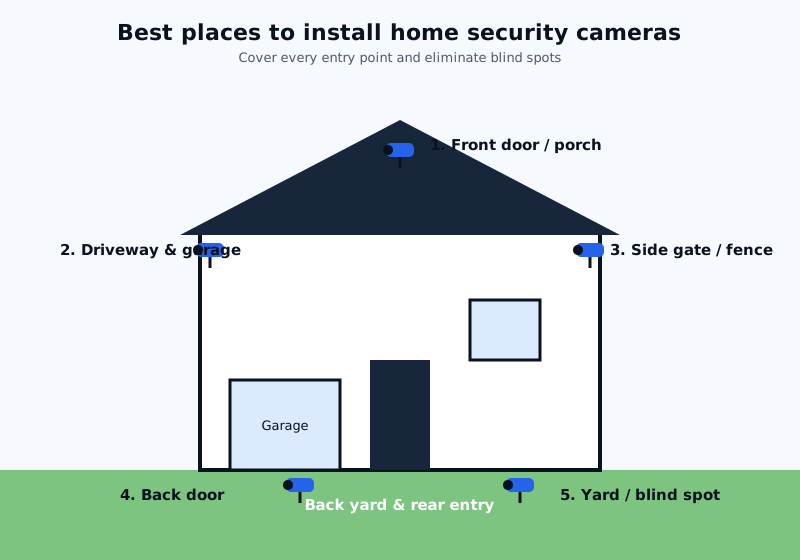
The five numbered positions above cover the vast majority of real-world break-in paths. Let's walk through each.
Not sure which system you need?
Answer a few quick questions and we'll match you with a top-rated provider for a free, no-obligation quote — or compare our top picks yourself.
The five priority positions
- Front door / porch. Your highest-traffic entry and where package thefts happen. A video doorbell plus an overhead camera covers faces and the approach.
- Driveway & garage. Catches vehicles, the garage door (a favorite entry), and anyone circling the house.
- Side gate / fence line. The quiet path to the back of the house. A camera here removes a burglar's favorite unseen approach.
- Back door. Out of street view and therefore a top target. Never leave it uncovered.
- Yard & blind spots. Any corner someone could use to stage or hide. One well-placed camera often covers the whole gap.
Common placement mistakes
Even good cameras fail when they're mounted wrong. The ones we fix most often:
- Aiming into the sun or at a bright window, which blows out the image at exactly the wrong time of day.
- Mounting too high, so you capture the top of a head instead of a face. Eight to ten feet is the sweet spot.
- Forgetting the second story where a porch roof or ladder gives access to upper windows.
- Ignoring indoor coverage — one interior camera at a main hallway is a valuable backstop if someone gets past the exterior.
Wired or wireless changes how easy each of these spots is to reach — our wired vs. wireless guide helps you match the camera type to the location.
Get your angles mapped for free
Every home is different, and a diagram can only take you so far. When a licensed installer do a free assessment, mapping camera angles to your specific entry points and blind spots is the core of the visit. We'll also flag anything a generic guide can't see from a floor plan.
Curious how covered you already are? The Home Security Score quiz gives you a fast read, and our best cameras guide can close whatever gaps it finds.